Logistics Advice
Goods-in-transit insurance explained for businesses
By the Princess Courier & Logistics teamUpdated
A plain-English guide to goods in transit insurance, carrier liability and the cover to check before you ship.
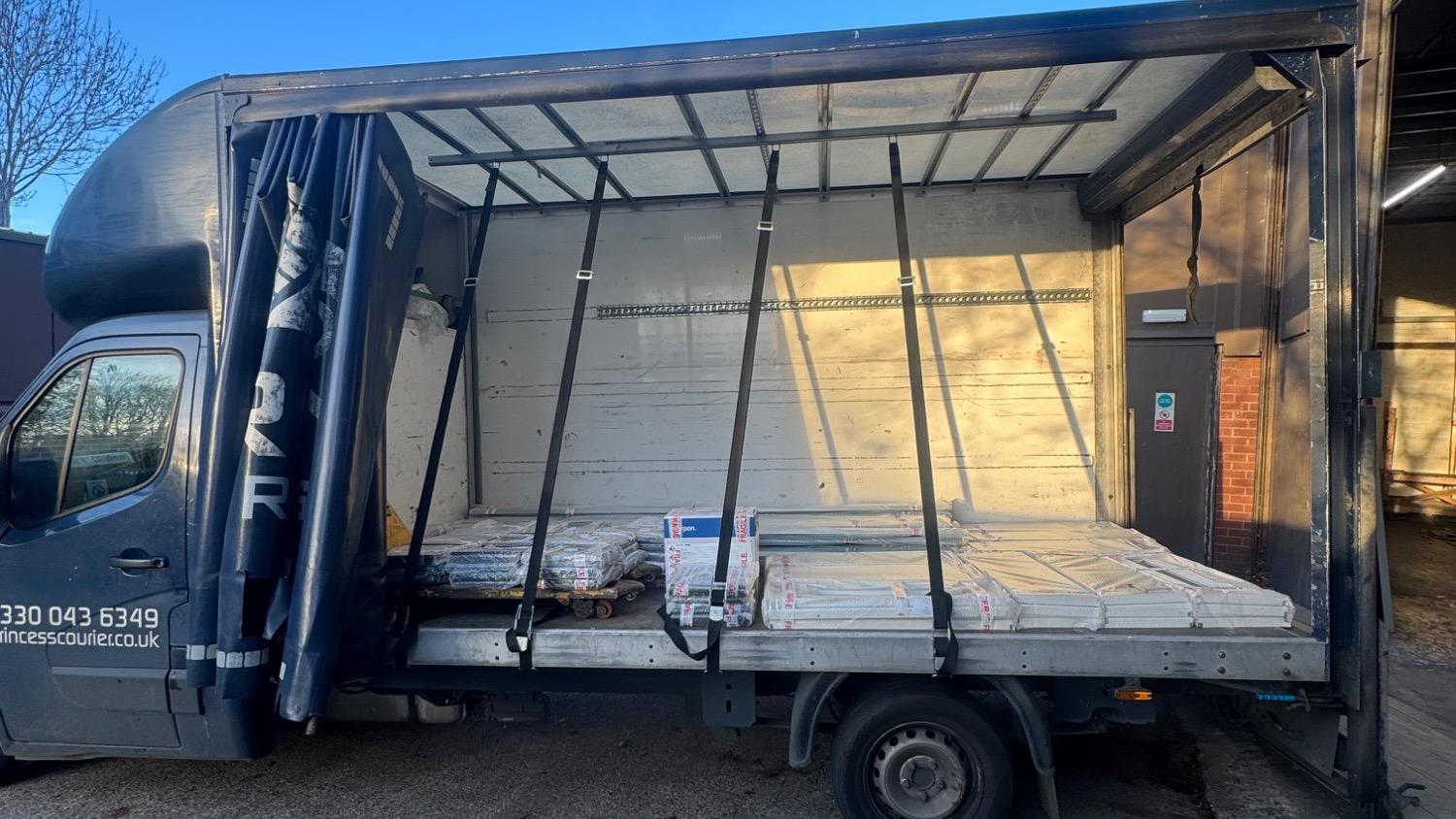
Goods in transit insurance is one of those things most businesses assume is "sorted" until a pallet arrives damaged or a van does not arrive at all. Then the questions start: who pays, how much, and what do you have to prove? This guide explains in plain English what goods in transit insurance is, how it differs from a carrier's liability, and what to check before you ship. It is general information, not legal or financial advice, so always read your own policy and the carrier's terms.
What is goods in transit insurance?
Goods in transit insurance (often shortened to GIT) is cover for loss of or damage to goods while they are being moved by road. It typically covers events such as theft, accident, fire or damage during carriage and loading. The details vary widely between policies, so the headline limit is only part of the picture.
It helps to separate three things people often mix up:
- The carrier's own goods in transit insurance cover. Insurance the haulier or courier holds for the goods it carries.
- The carrier's legal liability. What the carrier can be held responsible for under the contract and conditions of carriage, which may be less than the value of the goods.
- Your own insurance. A policy you buy yourself, or extra cover arranged for a particular shipment, usually for high-value or specialist goods.
Carrier's liability vs insurance cover
This is where businesses are caught out. In the UK, road haulage contracts are commonly based on standard conditions, and the RHA Conditions of Carriage are widely used. Conditions of this kind set out when the carrier is responsible, what it is not responsible for, and typically limit how much it will pay and how quickly a claim must be notified. Under such conditions, the amount you can recover may be lower than the invoice value of the goods, and the carrier's insurance exists to back up the carrier, not necessarily to make you whole.
That is why a figure like "cover of £150,000" tells you less than you might think. Always ask what the limit applies to, per what, and what you are expected to do to claim.
What cover do we provide?
At Princess Courier, every job runs under the RHA Conditions of Carriage 2026. Goods in transit cover is £150,000 for light goods and £9,500 per tonne for heavy goods, and we hold £5,000,000 public liability cover. We are a Road Haulage Association member. Our vehicles range from small vans to artics, and you can see the details on our HGV haulage and same day courier pages.
The £9,500 per tonne figure is worth working through. For heavy goods, cover scales with weight: as a simple illustration, a 2-tonne load works out at about £19,000 on that basis. If your goods are worth more than that, say so when you book so cover can be discussed.
Our terms also say our services include basic coverage and that additional insurance options may be available on request. We are not able to advise on whether any particular cover is right for you, so ask us for confirmation in writing of the cover for your specific job.
Light goods and heavy goods: why the split matters
Many policies and conditions treat goods differently depending on how they are measured. A van load of electronics might be low in weight but high in value, so a per-tonne limit would be a poor fit. A lorry load of building materials might be heavy but low in value per kilo. A two-part structure, a flat figure for light goods and a per-tonne figure for heavy goods, reflects that. What counts as "light" or "heavy" in your case is worth checking with the carrier before the goods move.
What is usually not covered
Every policy has exclusions, and they are where claims are often refused. Common examples include:
- poor or inadequate packing;
- goods left unattended, or loaded and unloaded by you;
- inherent defects, wear and tear or gradual deterioration;
- delay, or consequential losses such as lost sales or contract penalties;
- certain categories of goods, such as cash, jewellery, or goods that are prohibited or dangerous;
- goods whose value was not declared.
Read the exclusions list in the policy or conditions you are relying on. If your goods fall into a category that is excluded or restricted, ask about specific cover before you ship.
When you may need extra cover
Additional cover may be appropriate for valuable or specialist shipments. Think about extra cover when:
- the goods are worth more than the standard limit, or more than the per-tonne figure would give;
- the goods are fragile, high-value or hard to replace (prototypes, one-off items, art, specialist equipment);
- you would lose money beyond the value of the goods if they were late or lost;
- you want to be covered on a basis other than the carrier's conditions.
Declare the contents and value, then ask whether the included protection meets your needs before the goods travel. It is much easier to arrange cover beforehand than to argue about it afterwards.
Practical steps before you ship
- Declare the value. Tell the carrier what the goods are worth at the time of booking.
- Pack properly. Use packaging suited to the journey and, for pallets, stable stacking and wrapping. Our guide to preparing goods for courier collection covers this.
- Photograph the goods. Pictures of the load before it leaves help if there is a dispute later.
- Keep paperwork. Invoices, packing lists and the booking reference all support a claim.
- Check the paperwork on delivery. Note any visible damage or shortage on the delivery documents when you sign.
- Ask for the cover in writing if the goods are valuable.
What to do if something goes wrong
If goods are damaged or lost, act quickly. With us, report any damage to our team within 12 hours, quoting your booking reference. Keep the goods and packaging, take clear photographs of the damage, and provide the item details and proof of value. Ask about the applicable claims procedure and notification deadlines. For a lost shipment, contact us promptly with your booking reference, collection date and recipient details so we can investigate.
Conditions of carriage commonly set tight time limits for notifying damage or loss, and missing them can weaken or end a claim, so do not wait.
Insurance is not a guarantee of delivery
Goods in transit insurance deals with loss and damage, not timing. No delivery time is unconditionally guaranteed: traffic, severe weather and unforeseen disruption can affect arrival. If you have a strict deadline, discuss it before booking so the service agreed matches what you need. Our article on choosing the right courier service has more on questions worth asking any provider.
Ask us about your shipment
If you are shipping something valuable, awkward or unusual, tell us when you ask for a price through our quote form, or call or WhatsApp us. We take bookings 24/7 and will confirm what cover applies before the goods move.
Frequently asked questions
Is my shipment insured with Princess Courier?
Every job runs under the RHA Conditions of Carriage 2026, with goods in transit cover of £150,000 for light goods and £9,500 per tonne for heavy goods. Declare high-value or specialist goods before collection.
Is goods in transit insurance the same as public liability?
No. Goods in transit covers the goods being carried. Public liability covers injury to people or damage to third-party property caused by the business. We hold £5,000,000 public liability cover.
Will I get the full invoice value back if goods are lost?
Not necessarily. The amount depends on the conditions of carriage, the cover limits and the value declared. Check the limits and exclusions before shipping valuable goods.
Do I need additional insurance?
Possibly, for valuable or specialist shipments. Declare the contents and value and ask whether the included protection meets your needs.
What if the goods arrive late?
Goods in transit cover normally deals with loss and damage rather than delay. Because delivery times are not unconditionally guaranteed, discuss strict deadlines before you book.